Buy art-works.eu ?
We are moving the project
art-works.eu .
Are you interested in purchasing the domain
art-works.eu ?
domain@kv-gmbh.de · 0541-91531010
Buy art-works.eu ?
Are photons electrons?
No, photons are not electrons. Photons are elementary particles that make up light and electromagnetic radiation, while electrons are negatively charged subatomic particles that are part of atoms. Photons have no mass and travel at the speed of light, while electrons have mass and are bound to the nucleus of an atom. **
What happens to photons?
Photons are elementary particles that make up light. They do not have mass and travel at the speed of light. When photons interact with matter, they can be absorbed, reflected, or transmitted. Absorption of photons can result in the excitation of electrons, leading to various physical and chemical processes. **

Similar search terms for Photons
Top-Angebote
Products related to Photons:
-
bareMinerals Mineralist Gloss-Balm-ImaginationDrench lips with sheer colour and glossy shine. Enriched with sustainably sourced fruit oils, this vegan lip gloss-balm delivers instant nourishment in a cushiony, non-sticky formula. Lips feel softer, smoother and more hydrated over time - even after you take it off. The cap and vial are made with post-consumer recycled plastic. Get the best of gloss and balm in one: sheer colour, high-shine and irresistibly soft lips. 90% said their lips felt instantly hydrated* Delivers up to 50% smoother lips in just 1 week* Based on a 1-week clinical study with 30 people. Results may vary. Dermatologist-tested. Shades: • Ambition • Clarity • Enlightenment • Heart • Imagination • Ingenuity • Love • Peace • Serenity • Sincerity • Trust • Vision • Wonder • Zen Ingredients Ambition, Clarity, Enlightenment, Heart, Imagination, Ingenuity, Love, Peace, Serenity, Sincerity, Trust, Vision, Wonder, Zen: Diisostearyl Malate, Phenyl Dimethicone, Triisostearyl Citrate, Glyceryl Behenate, Helianthus Annuus (Sunflower) Seed Wax, Simmondsia Chinensis (Jojoba) Seed Oil, Punica Granatum Flower Extract, Hippophae Rhamnoides Oil, Prunus Domestica Seed Oil, Ascorbyl Palmitate, Tocopherol, Silica Dimethyl Silylate, Calcium Stearate, Polyglyceryl-2 Triisostearate, Flavor (Aroma), Linalool. May Contain/Peut Contenir (+/-): Mica, Titanium Dioxide (Ci 77891), Iron Oxides (Ci 77491, Ci 77492, Ci 77499), Blue 1 Lake (Ci 42090), Red 7 Lake (Ci 15850), Red 28 Lake (Ci 45410), Yellow 5 Lake (Ci 19140).15,60 £*Shipping: 2,95 £Secure redirect to the provider
-
HARPERCOLLINS Creative Confidence by Tom & David Kelley – Unleashing Your Creative Potential & Innovation MindsetA powerful and inspiring book from the founders of IDEO, the award-winning design firm, on unleashing the creativity that lies within each and every one of us. Too often, companies and individuals assume that creativity and innovation are the domain of the ‘creative types’. But two of the foremost experts in innovation, design and creativity on the planet show us that each and every one of us is creative. In an entertaining and inspiring narrative that draws on countless stories from their work at IDEO, and with many of the world's top companies and design firms, David and Tom Kelley identify the principles and strategies that will allow us to tap into our creative potential in our work lives, and in our personal lives, allow us to think outside the box in terms of how we approach and solve problems. ‘Creative Confidence’ is a book that will help each of us be more productive and successful in our lives and in our careers.4,95 £*Shipping: 1,99 £Secure redirect to the provider
-
Sagebrook Home Hennie Black & White Glass Vase CraftsmanshipElevate your space with the essence of elegance through Sagebrook Home's exquisite glass vase. Expertly crafted from the finest materials, this delicate piece is a testament to timeless beauty, poised to enhance any bouquet.75,99 $*Shipping: 0,00 $Secure redirect to the provider
-
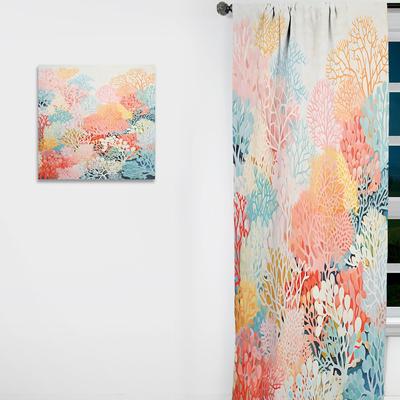
DESIGN ART "Designart ""Coral Reef Barrier Expression"" Coastal Coral Curtain - Blackout Animal Print Curtain - 1 Panel""Bring a breath of fresh air to your windows and spruce up any space in your home with this ""Coral Reef Barrier Expression"" Coastal Coral 1 panel curtain. This beautiful Nautical curtain is handmade on demand just for you."80,50 $*Shipping: 0,00 $Secure redirect to the provider




-
How are photons created?
Photons are created through a process called electromagnetic radiation. This occurs when an atom absorbs energy, causing its electrons to move to a higher energy level. When the electrons return to their original energy level, they release the absorbed energy in the form of photons. This process can happen in various ways, such as through thermal radiation, chemical reactions, or nuclear reactions. **
-
How can one convert the energy of different photons into monochromatic photons?
One way to convert the energy of different photons into monochromatic photons is through a process called frequency doubling or second harmonic generation. This involves passing the photons through a nonlinear crystal, which causes the photons to combine and create new photons with double the frequency and half the wavelength of the original photons. This results in monochromatic photons with a single, specific wavelength. Another method is through the use of filters or monochromators, which can selectively filter out photons of specific wavelengths, allowing only monochromatic photons to pass through. **
-
How far do photons travel?
Photons, as particles of light, travel at the speed of light in a vacuum, which is approximately 299,792 kilometers per second. This means that photons can travel vast distances in a very short amount of time. However, their travel distance can be affected by factors such as absorption, reflection, and scattering, which can cause them to be absorbed or redirected before reaching their destination. **
-
What distinguishes photons and protons?
Photons are elementary particles that carry electromagnetic radiation, such as light, while protons are subatomic particles found in the nucleus of an atom. Photons have no mass and travel at the speed of light, while protons have mass and are composed of quarks. Additionally, photons do not have an electric charge, while protons have a positive electric charge. **


Why can photons penetrate matter?
Photons can penetrate matter because they do not have an electric charge and are not affected by electromagnetic forces within the material. Additionally, photons do not have mass, allowing them to travel at the speed of light and pass through matter without being absorbed or deflected. This property of photons enables them to interact with atoms and molecules in the material, leading to phenomena such as absorption, reflection, and transmission. **
How can photons have mass?
Photons are massless particles according to the Standard Model of particle physics. They travel at the speed of light and have zero rest mass. However, in certain theoretical models beyond the Standard Model, such as some versions of string theory, it is possible for photons to acquire a small amount of mass through interactions with other particles or fields. This mass is typically very small and has not been experimentally observed. **
Top-Angebote
Products related to Photons:
-
FOREO Imagination 100mlFOREO Imagination unique formula acts as the perfect base to your homemade face mask - so now you can make the most out of the fresh, natural ingredients from your kitchen. Formulated with Triple Infusion Complex, active nutrients are absorbed deep into the skin, feeding it from within. This antioxidant rich innovative product is enriched with Squalane and Vitamin E to help replenish fatty acids, and protect the skin from UV damage and damage caused by free radicals, leaving your skin looking and feeling healthier than ever before. Ingredients Aqua/Water/Eau, Glycerin, Cetearyl Alcohol, Caprylic/Capric Triglyceride, Cetyl Ethylhexanoate, Glyceryl Stearate, PEG-100 Stearate, Glycereth-26, Magnesium Aluminometasilicate, Dicaprylyl Carbonate, Hydroxyethyl Acrylate/Sodium Acryloyldimethyl Taurate Copolymer, Squalane, Potassium Cetyl Phosphate, Polysorbate 60, Trehalose, Hydroxyacetophenone, Pentaerythrityl Distearate, 1,2-Hexanediol, Xanthan Gum, Phospholipids, Allantoin, Panthenol, Bis-Ethoxydiglycol Cyclohexane 1,4-Dicarboxylate, Tocopheryl Acetate, Citrus Aurantium Dulcis Oil, Glycine Soja Oil, Sodium PCA, Disodium EDTA, Glycolipids, Dipotassium Glycyrrhizate, Glycine Soja Sterols, Propylene Glycol, Sodium Hyaluronate, Linoleic Acid, Glyceryl Linolenate41,99 £*Shipping: 0,00 £Secure redirect to the provider
-
DESIGN ART "Designart ""Coral Reef Barrier Expression"" Coastal Coral Curtain - Blackout Animal Print Curtain - 1 Panel""Bring a breath of fresh air to your windows and spruce up any space in your home with this ""Coral Reef Barrier Expression"" Coastal Coral 1 panel curtain. This beautiful Nautical curtain is handmade on demand just for you."69,83 $*Shipping: 0,00 $Secure redirect to the provider
-
bareMinerals Mineralist Gloss-Balm-ImaginationDrench lips with sheer colour and glossy shine. Enriched with sustainably sourced fruit oils, this vegan lip gloss-balm delivers instant nourishment in a cushiony, non-sticky formula. Lips feel softer, smoother and more hydrated over time - even after you take it off. The cap and vial are made with post-consumer recycled plastic. Get the best of gloss and balm in one: sheer colour, high-shine and irresistibly soft lips. 90% said their lips felt instantly hydrated* Delivers up to 50% smoother lips in just 1 week* Based on a 1-week clinical study with 30 people. Results may vary. Dermatologist-tested. Shades: • Ambition • Clarity • Enlightenment • Heart • Imagination • Ingenuity • Love • Peace • Serenity • Sincerity • Trust • Vision • Wonder • Zen Ingredients Ambition, Clarity, Enlightenment, Heart, Imagination, Ingenuity, Love, Peace, Serenity, Sincerity, Trust, Vision, Wonder, Zen: Diisostearyl Malate, Phenyl Dimethicone, Triisostearyl Citrate, Glyceryl Behenate, Helianthus Annuus (Sunflower) Seed Wax, Simmondsia Chinensis (Jojoba) Seed Oil, Punica Granatum Flower Extract, Hippophae Rhamnoides Oil, Prunus Domestica Seed Oil, Ascorbyl Palmitate, Tocopherol, Silica Dimethyl Silylate, Calcium Stearate, Polyglyceryl-2 Triisostearate, Flavor (Aroma), Linalool. May Contain/Peut Contenir (+/-): Mica, Titanium Dioxide (Ci 77891), Iron Oxides (Ci 77491, Ci 77492, Ci 77499), Blue 1 Lake (Ci 42090), Red 7 Lake (Ci 15850), Red 28 Lake (Ci 45410), Yellow 5 Lake (Ci 19140).15,60 £*Shipping: 2,95 £Secure redirect to the provider
-
HARPERCOLLINS Creative Confidence by Tom & David Kelley – Unleashing Your Creative Potential & Innovation MindsetA powerful and inspiring book from the founders of IDEO, the award-winning design firm, on unleashing the creativity that lies within each and every one of us. Too often, companies and individuals assume that creativity and innovation are the domain of the ‘creative types’. But two of the foremost experts in innovation, design and creativity on the planet show us that each and every one of us is creative. In an entertaining and inspiring narrative that draws on countless stories from their work at IDEO, and with many of the world's top companies and design firms, David and Tom Kelley identify the principles and strategies that will allow us to tap into our creative potential in our work lives, and in our personal lives, allow us to think outside the box in terms of how we approach and solve problems. ‘Creative Confidence’ is a book that will help each of us be more productive and successful in our lives and in our careers.4,95 £*Shipping: 1,99 £Secure redirect to the provider
-
Are photons electrons?
No, photons are not electrons. Photons are elementary particles that make up light and electromagnetic radiation, while electrons are negatively charged subatomic particles that are part of atoms. Photons have no mass and travel at the speed of light, while electrons have mass and are bound to the nucleus of an atom. **
-
What happens to photons?
Photons are elementary particles that make up light. They do not have mass and travel at the speed of light. When photons interact with matter, they can be absorbed, reflected, or transmitted. Absorption of photons can result in the excitation of electrons, leading to various physical and chemical processes. **
-
How are photons created?
Photons are created through a process called electromagnetic radiation. This occurs when an atom absorbs energy, causing its electrons to move to a higher energy level. When the electrons return to their original energy level, they release the absorbed energy in the form of photons. This process can happen in various ways, such as through thermal radiation, chemical reactions, or nuclear reactions. **
-
How can one convert the energy of different photons into monochromatic photons?
One way to convert the energy of different photons into monochromatic photons is through a process called frequency doubling or second harmonic generation. This involves passing the photons through a nonlinear crystal, which causes the photons to combine and create new photons with double the frequency and half the wavelength of the original photons. This results in monochromatic photons with a single, specific wavelength. Another method is through the use of filters or monochromators, which can selectively filter out photons of specific wavelengths, allowing only monochromatic photons to pass through. **
Similar search terms for Photons
-
Sagebrook Home Hennie Black & White Glass Vase CraftsmanshipElevate your space with the essence of elegance through Sagebrook Home's exquisite glass vase. Expertly crafted from the finest materials, this delicate piece is a testament to timeless beauty, poised to enhance any bouquet.75,99 $*Shipping: 0,00 $Secure redirect to the provider
-
DESIGN ART "Designart ""Coral Reef Barrier Expression"" Coastal Coral Curtain - Blackout Animal Print Curtain - 1 Panel""Bring a breath of fresh air to your windows and spruce up any space in your home with this ""Coral Reef Barrier Expression"" Coastal Coral 1 panel curtain. This beautiful Nautical curtain is handmade on demand just for you."80,50 $*Shipping: 0,00 $Secure redirect to the provider
-
DESIGN ART "Designart ""Coral Reef Barrier Expression"" Coastal Coral Curtain - Blackout Animal Print Curtain - 1 Panel""Bring a breath of fresh air to your windows and spruce up any space in your home with this ""Coral Reef Barrier Expression"" Coastal Coral 1 panel curtain. This beautiful Nautical curtain is handmade on demand just for you."83,18 $*Shipping: 0,00 $Secure redirect to the provider
-
DESIGN ART "Designart ""Coral Reef Barrier Expression"" Coastal Coral Curtain - Blackout Animal Print Curtain - 1 Panel""Bring a breath of fresh air to your windows and spruce up any space in your home with this ""Coral Reef Barrier Expression"" Coastal Coral 1 panel curtain. This beautiful Nautical curtain is handmade on demand just for you."99,90 $*Shipping: 0,00 $Secure redirect to the provider
-
How far do photons travel?
Photons, as particles of light, travel at the speed of light in a vacuum, which is approximately 299,792 kilometers per second. This means that photons can travel vast distances in a very short amount of time. However, their travel distance can be affected by factors such as absorption, reflection, and scattering, which can cause them to be absorbed or redirected before reaching their destination. **
-
What distinguishes photons and protons?
Photons are elementary particles that carry electromagnetic radiation, such as light, while protons are subatomic particles found in the nucleus of an atom. Photons have no mass and travel at the speed of light, while protons have mass and are composed of quarks. Additionally, photons do not have an electric charge, while protons have a positive electric charge. **
-
Why can photons penetrate matter?
Photons can penetrate matter because they do not have an electric charge and are not affected by electromagnetic forces within the material. Additionally, photons do not have mass, allowing them to travel at the speed of light and pass through matter without being absorbed or deflected. This property of photons enables them to interact with atoms and molecules in the material, leading to phenomena such as absorption, reflection, and transmission. **
-
How can photons have mass?
Photons are massless particles according to the Standard Model of particle physics. They travel at the speed of light and have zero rest mass. However, in certain theoretical models beyond the Standard Model, such as some versions of string theory, it is possible for photons to acquire a small amount of mass through interactions with other particles or fields. This mass is typically very small and has not been experimentally observed. **
* All prices are inclusive of VAT and, if applicable, plus shipping costs. The offer information is based on the details provided by the respective shop and is updated through automated processes. Real-time updates do not occur, so deviations can occur in individual cases. ** Note: Parts of this content were created by AI.